The Complete Guide
What Is Sukabumi Green Stone?
Sukabumi Green Stone is a natural andesite volcanic stone quarried in the Sukabumi Regency of West Java, Indonesia. Its distinctive grey-green colour comes from zeolite and chlorite minerals within the rock, and it is used worldwide for swimming pool tiles, coping, pavers, mosaic and cladding because it stays cool underfoot, resists slipping when wet, and holds its colour for decades.
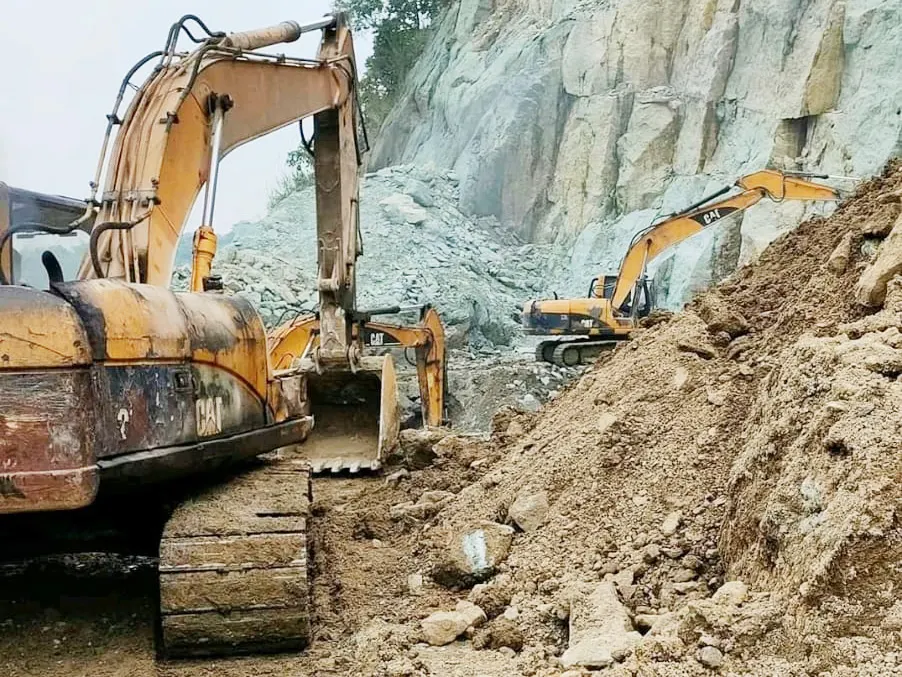
Origin and Geology
Sukabumi Green Stone is quarried exclusively in the Sukabumi Regency, a volcanic region of West Java roughly 100km south of Jakarta. Geologically, it is classified as andesite — a fine-to-medium grained igneous rock formed from cooled volcanic lava. Its mineral composition is primarily plagioclase feldspar and pyroxene within an andesitic groundmass, with zeolite, chlorite and quartz present as secondary minerals that produce the stone's characteristic green-grey colouration.
Because the colour is intrinsic to the mineral composition rather than a surface treatment, Sukabumi Green Stone is highly colour-stable under UV exposure — a meaningful advantage over dyed or resin-based alternatives for outdoor and pool applications.
Why It's Used for Swimming Pools
Three properties drive its popularity in pool construction worldwide: it stays notably cool underfoot even in direct tropical sun, its natural cleft and bush-hammered finishes provide meaningful slip resistance on wet surfaces, and its moderate porosity — combined with proper sealing — resists algae growth better than many porous alternatives. These properties make it a preferred material for pool coping, waterline tiles, pool decks and surrounds from Bali resorts to Dubai villas.
Products & Applications
We produce Sukabumi Green Stone as tiles, pavers, pool coping, mosaic waterline sheets, cladding panels and stepping stones, in natural cleft, honed, tumbled, bush-hammered, sandblasted and flamed finishes. Standard and custom sizes are available direct from our factory in West Java.
Sourcing It Direct From the Factory
Buying factory-direct from CV Alam Berkah Indonesia means no trading-company markup, direct quality-control accountability, and the ability to request custom cutting or finishes. Our export team ships to 19+ countries with full documentation and a transparent process — see our export process guide for details.
Explore Every Topic
The Complete Sukabumi Green Stone Topic Map
This pillar page links to every cluster hub on the site — start wherever your project needs take you.
Swimming Pool Stone
Pool coping, waterline tiles, non-slip pool tile guide
Green Stone Tiles
Sizes guide, finishes guide, tile vs. slab
Green Stone Pavers
Driveway pavers, garden pavers, paver thickness guide
Indonesia Natural Stone
Sukabumi Regency overview, Indonesia stone industry, Bali vs. Sukabumi stone
Pool Design
Tropical pool design ideas, infinity pool material guide
Luxury Pools
5-star resort case studies, luxury villa pool design
Stone Maintenance
Cleaning guide, sealing guide, algae prevention
Installation Guide
Tile installation steps, paver installation, adhesive & grout guide
Export Process
FOB vs. CIF explained, documents required, container loading guide, Incoterms guide
Factory Overview
Quarry to finished product, quality control process, factory tour video
Projects
Hotel projects, private villa projects, commercial projects
Case Studies
Case studies by country
Product Comparison
vs. travertine, vs. Bali stone, vs. porcelain, vs. Pebble Tec
Certifications
ISO overview, SNI overview, SGS inspection, sustainability
FAQs
Comprehensive FAQ hub
Common Questions About Sukabumi Green Stone
What is Sukabumi Green Stone?
Sukabumi Green Stone is a natural andesite-based volcanic stone quarried in the Sukabumi Regency of West Java, Indonesia. Its distinctive grey-green colour comes from zeolite and chlorite minerals within the stone, and it is prized worldwide for swimming pool tiles, coping, pavers and cladding because it stays cool underfoot and resists slipping when wet.
Where does Sukabumi Green Stone come from?
It is quarried exclusively in the Sukabumi Regency of West Java, Indonesia, a volcanic region roughly 100km south of Jakarta. The specific mineral composition of this region’s andesite deposits is what produces the stone’s characteristic green-grey tone, which is why genuine Sukabumi Green Stone cannot be sourced elsewhere.
Why is Sukabumi Green Stone green?
The green-grey hue comes from zeolite, chlorite and other secondary minerals that formed within the andesite as volcanic rock cooled and weathered over geological time. The intensity of the green varies slightly by quarry seam, which is why finish (natural cleft, honed, tumbled) and lighting both affect the perceived shade in photos.
Is Sukabumi Green Stone a type of marble?
No. Marble is a metamorphic rock formed from recrystallized limestone, while Sukabumi Green Stone is an igneous andesite — a volcanic rock. This matters practically: andesite is significantly harder and less porous than most marbles, which is part of why it performs better in wet, high-traffic pool environments.
Is Sukabumi Green Stone natural?
Yes. Every piece is cut from quarried natural stone blocks — it is not a manufactured, cast or reconstituted product. Natural variation in colour, veining and texture between pieces is expected and is part of what distinguishes genuine natural stone from porcelain look-alikes.
What is Sukabumi Green Stone made of?
Mineralogically it is composed primarily of plagioclase feldspar and pyroxene within an andesitic groundmass, with zeolite, chlorite and quartz present as secondary minerals that contribute to its green colouration and moderate porosity.
Is Sukabumi Green Stone volcanic rock?
Yes. It is classified geologically as andesite, an igneous volcanic rock formed from cooled lava with a fine-to-medium grain structure, which gives it the density and hardness that make it suitable for high-traffic outdoor and pool applications.
What is the difference between Sukabumi stone and Bali stone?
"Bali stone" is a broad trade term covering several volcanic stone types quarried across Indonesia, including andesite and lava stone, and is often used generically in markets like Australia. Sukabumi Green Stone is a specific, single-source andesite from the Sukabumi Regency of West Java with a distinctive green-grey colour — not all "Bali stone" shares this origin or colour profile.